
Athletic & Performance
Best Running Shoes for Achilles Pain: Relieving the Tension
OCT. 5, 2026
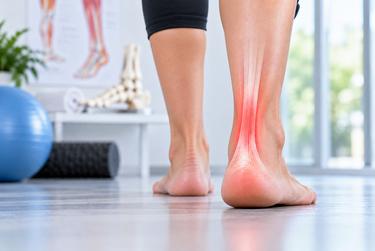
Quick Answer: The Heel-Drop Relief Strategy
The best running shoes for Achilles pain are engineered to reduce mechanical strain on the Achilles tendon by utilizing a higher heel-to-toe drop (typically 10mm to 12mm). Elevating your heel relative to your forefoot shortens the distance the tendon must stretch during every foot strike and push-off, providing immediate relief from tension. Additionally, prioritize footwear built with responsive heel cushioning and a flared, padded heel counter to prevent direct friction against the sensitive insertion point at the back of your heel. Find top Achilles-friendly running shoes in-store and online at Shoe Station.
Offloading Tendon Stress on the Road
That tight, burning sensation along the back of your ankle can turn a daily workout into a painful ordeal. Achilles tendinitis is one of the most common overuse injuries in running, frequently triggered by sudden intensity spikes or footwear that forces the tendon to overstretch under heavy impact loads.
When your Achilles is inflamed, every toe-off applies massive tensile force to a vulnerable, poorly vascularized area. Selecting the right running shoes acts as a mechanical intervention to offload that stress, providing an elevated "platform" for your heel to sit higher and move without excessive strain.
Key Structural Features for Achilles Relief
-
Higher Heel-to-Toe Drop (10mm–12mm): Raising the heel relative to the forefoot is the gold standard for tendon relief. A high drop physically relaxes the Achilles tendon throughout your gait cycle.
-
Articulated or Flared Heel Counter: Look for "Achilles flares" or soft, padded collars that curve away from the ankle. Stiff, inward-curving heel counters press directly against the tendon's insertion point, worsening inflammation.
-
Responsive Shock-Absorbing Midsole: High-grade foam that dampens force upon heel strike prevents impact energy from traveling directly up into the lower leg.
-
Unconstrained Forefoot Flexibility: A shoe with good forefoot flex allows your foot to roll naturally into push-off without requiring maximum force from the Achilles.
Top Running Shoes for Achilles Relief at Shoe Station
Different stride mechanics and foot types call for specific approaches to managing tendon tension:
1. The High-Drop Benchmark: Brooks Ghost 16 / 17
- Why It Works: Featuring a classic 12mm heel-to-toe drop, the Brooks Ghost is a premier choice for runners dealing with Achilles discomfort. It provides immediate structural lift, substantially reducing the stretch required from the tendon during every stride.
2. The Plush Rearfoot Protector: Brooks Glycerin 21 / 22
- Why It Works: Built with a 10mm drop and nitrogen-infused DNA LOFT v3 foam, the Brooks Glycerin combines essential heel elevation with maximum shock absorption—making it ideal if your Achilles pain is accompanied by general heel or heel spur sensitivity.
3. The Low-Flexion Alternative: HOKA Clifton 9 / 10
- Why It Works: While HOKAs utilize a lower traditional drop (5mm), their signature Late-Stage Meta-Rocker geometry acts as a smooth rolling mechanism. The rockered sole rolls your foot forward during toe-off, preventing the ankle joint from flexing deeply and minimizing tendon engagement.
The Takeaway: Choose a High-Drop Brooks to mechanically shorten the tendon stretch. Choose a Rockered HOKA if you prefer a rolling stride that minimizes overall ankle flex.
Actionable Diagnostic: The "Hot Spot & Heel Counter" Check
Before heading out for a run in new footwear, perform this quick physical inspection to protect your tendon:
Put on your running shoes with your standard running socks and stand upright. Squeeze the back collar surrounding your Achilles tendon and take ten brisk steps.
-
The Collar Flare Test: Place your finger between your Achilles tendon and the top back edge of the shoe collar. You should feel zero digging or firm pressure against the tendon. If the collar presses inward, re-lace using a lower eyelet or choose a model featuring an articulated Achilles flare (like the Brooks Ghost or HOKA Clifton).
-
The Drop Test: If your tendon aches immediately upon standing flat, add a temporary 3mm to 5mm silicone heel lift under the insole to elevate your heel while recovering.
Achilles Pain and Running Shoes FAQs
Does a higher heel-to-toe drop really help with Achilles tendinitis? Yes! A higher drop (10mm to 12mm) physically lifts your heel higher than your toes, placing the Achilles tendon in a shorter, more relaxed state throughout the gait cycle to reduce strain.
Should I avoid zero-drop shoes while recovering from Achilles pain? Yes, absolutely. Zero-drop running shoes force the Achilles tendon and calf muscles to stretch to their maximum length on every step. Avoid zero-drop models entirely until your tendon has fully healed.
Is Brooks or HOKA better for Achilles tendinitis? Brooks is generally better for immediate relief because of its consistent 10mm to 12mm heel drops that shorten the tendon stretch. HOKA is excellent for runners who prefer a rockered sole design that rolls the foot forward to reduce overall ankle joint movement.
How should I lace my running shoes to avoid irritating my Achilles? Avoid over-tightening the top eyelets over your ankle. Choking the top of the shoe compresses the area where the Achilles meets the heel, aggravating the tendon. Keep top lacing snug but comfortable, or utilize a parallel straight-bar lacing technique to reduce pressure.
