
Sizing & How-To
The Perfect Fit Blueprint: How to Measure Your Feet at Home
OCT. 21, 2026
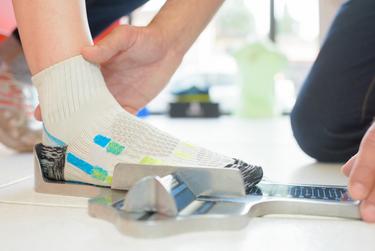
Quick Answer: The 3-Step Precision Measurement
Finding your true shoe size doesn't require specialized store equipment if you follow a precise measurement method. To measure your feet accurately at home, tape a sheet of paper to a hard floor, trace the outline of both feet while standing with your full body weight, and measure the distance from the back of your heel to the tip of your longest toe. Always fit your shoes to your larger foot, measure in the late afternoon to account for natural swelling, and allow a thumb's width (1/2 inch) of toe clearance. Discover your true fit and shop top brand arrivals in-store and online at Shoe Station.
Why Accurate Foot Measurement Matters
Over 60% of adults walk around in the wrong shoe size - frequently wearing shoes that are too narrow or half a size too small. Shoe sizing is not universal; a size 9 from an athletic brand like Brooks or HOKA can fit completely differently than a size 9 casual loafer or dress flat from Clarks or Birkenstock.
Furthermore, adult feet change shape over time. Factors such as natural ligament laxity, pregnancy, weight fluctuations, and daily standing cause feet to flatten, lengthen, and widen over the years. Knowing how to measure your feet accurately at home provides an objective baseline, eliminating the trial-and-error of digital ordering and ensuring all-day comfort.
Home Foot Measuring vs. In-Store Fitting
-
Heel-to-Toe Length: The straight-line distance from your heel to your longest toe (which is often your second toe, not your big toe).
-
Ball Width: The widest horizontal distance across the forefoot where your metatarsal joints splay during each step.
-
The Two-Foot Rule: Almost everyone has one foot that is slightly longer or wider than the other. Always trace both feet and purchase footwear sized for the larger measurement.
-
The Afternoon Swell Factor: Gravity causes fluids to settle in your lower extremities throughout the day. Measuring your feet in the late afternoon or evening ensures your shoes won't feel constrictive during long walks or work shifts.
How to Measure Your Feet at Home in 4 Steps
1. Gather Your Supplies
You will need a hard, flat floor surface (tile or wood—avoid plush carpet), two pieces of blank paper larger than your feet, a pencil or pen held perfectly vertical, a standard ruler or tape measure, and tape to secure the paper.
2. Prep with Your Everyday Socks
Put on the exact socks you intend to wear with the shoes you are shopping for (e.g., thick cushioned athletic socks for running shoes, or thin no-show liners for casual flats).
3. Stand, Trace, and Splay
Tape the paper securely to the floor. Stand upright with your full body weight distributed evenly across both feet. Have a partner trace around your foot with the pen held at a strict 90-degree vertical angle against your skin. Note: Leaning the pen inward under your footbed results in a measurement that is too small.
4. Measure Length and Width
Use your ruler to measure the distance between the two furthest points: from the back of the heel curve to the tip of your longest toe. Record the measurement in inches or centimeters, then repeat the process for your other foot.
Actionable Diagnostic: The "Insole Stomp" Verification Check
Once your new shoes arrive at your door or while trying them on in your living room, perform this quick 30-second fit verification:
-
Remove the Insole: Pull the removable factory footbed directly out of the shoe and place it flat on the hard floor.
-
Step and Splay: Stand directly on top of the insole with your heel seated in the rear cup, putting your full body weight down.
-
The Clearance Audit: Check the front edge and side boundaries.
- The Verdict: You should see a clear thumb's width (roughly 1/2 inch) of space between your longest toe and the top edge of the insole. If your toes spill over the lateral edges, you need a Wide (D/2E) width. If your toes touch the front boundary, exchange for a half-size larger immediately.
Foot Measuring and Sizing FAQs
How much room should be left in the toe of a shoe? You should always have approximately a thumb's width (roughly 1/2 inch) of space between your longest toe and the front edge of the shoe. This space allows your toes to splay and slide forward naturally during your walking or running stride without jamming into the toe cap.
Why should I measure my feet at the end of the day? As you walk, stand, and move, blood flow and fluid accumulation cause your feet to swell by up to half a size by late afternoon. Measuring in the evening ensures your footwear accommodates your foot at its maximum daily volume.
What should I do if my feet measure two different sizes? Always buy shoes to comfortably fit your larger foot. Accommodating the larger foot prevents painful blisters, black toenails, and nerve compression. You can easily snug up the fit on the smaller foot using a slightly thicker sock or an aftermarket volume insole.
How do I convert my inch measurements into my shoe size? Refer to a standardized brand size chart. As a baseline rule of thumb in U.S. women’s sizing, a foot measuring 9.75 inches corresponds roughly to a size 8, while 10 inches corresponds to a size 8.5. In U.S. men's sizing, a 10.5-inch measurement corresponds roughly to a size 9. Always cross-reference against specific brand charts for exact matches.